10 Basic Steps to Deep Watering
Deep-rooted plants survive drought, anchor soil, and access nutrients beyond the reach of shallow feeders. Most gardeners water too frequently and too lightly, training roots to cluster near the surface where they remain vulnerable to heat stress and desiccation. Mastering the steps to deep watering transforms this pattern, pushing moisture down 12 to 18 inches into the profile where it sustains perennials, shrubs, and trees through extended dry periods. The technique requires patience, proper tools, and an understanding of soil structure and hydraulic conductivity.
Materials
Begin with a soil probe or metal rod to measure penetration depth. Choose one at least 24 inches long to confirm water has moved through the A horizon and into the B horizon. A slow-release organic fertilizer rated 4-4-4 or 5-3-2 supports microbial activity without triggering excessive top growth that outpaces root development. Mycorrhizal fungi inoculant, applied at transplant or worked into the root zone of established plants, extends the effective absorption area by 10 to 100 times through hyphal networks.
Install soaker hoses or drip irrigation emitters rated at 0.5 to 1.0 gallons per hour. These low-flow devices prevent runoff on clay soils with infiltration rates below 0.2 inches per hour. A rain gauge placed at ground level measures actual delivery. Mulch is non-negotiable: 3 to 4 inches of shredded hardwood bark or aged compost moderates soil temperature, reduces evaporation by up to 70 percent, and maintains the aerobic conditions that allow oxygen diffusion to root tips.
For pH management, keep sulfur on hand if you garden above 7.5, or dolomitic lime if native soil falls below 5.8. Cation exchange capacity governs nutrient retention, so amend sandy profiles with compost at a 1:3 ratio annually to build organic matter above 3 percent.
Timing
Execute deep watering during the dormant season or immediately after transplant to establish the root framework before heat stress begins. In Zones 3 through 6, schedule initial deep irrigation two weeks after the last spring frost date, when soil temperatures reach 50°F and roots resume active growth. Zones 7 through 9 allow fall planting; water deeply in October or November when evapotranspiration drops below 0.15 inches per day.
Avoid deep watering during the hottest part of the growing season unless plants show wilt at dawn. Morning irrigation between 4 a.m. and 9 a.m. reduces foliar disease pressure and allows time for surface water to percolate before midday heat accelerates evaporation. In Mediterranean climates, align deep watering cycles with the transition into the dry season, typically late April through May, to harden off plants before summer dormancy.
Phases

Sowing: Direct-seeded crops benefit from pre-irrigation that saturates the top 8 inches before planting. Run drip lines or soaker hoses for 3 to 4 hours to establish a moisture reservoir. Seed into the damp profile, then apply a light daily sprinkle for 5 to 7 days to maintain germination without displacing the reservoir below. Once seedlings develop true leaves, switch to deep cycles every 5 to 7 days.
Pro-Tip: Coat large seeds such as beans, peas, and squash with rhizobium or trichoderma inoculant before sowing to colonize roots during emergence and improve nitrogen fixation or pathogen resistance.
Transplanting: Water the planting hole to field capacity one hour before setting rootballs. This ensures immediate hydraulic contact between native soil and potting media, preventing air gaps that block capillary movement. After placing the transplant, apply 1 to 2 gallons directly to the root zone, then mulch to the drip line. Repeat every 3 days for two weeks, extending intervals as new feeder roots proliferate.
Pro-Tip: Prune circling roots at a 45-degree angle before transplanting to stimulate auxin distribution and lateral branching, reducing transplant shock and accelerating establishment.
Establishing: Once plants exhibit new vegetative growth, typically 3 to 4 weeks post-transplant, shift to weekly deep watering. Deliver 1 inch of water per session, measured by placing a tuna can under the emitter and timing until it fills. This volume penetrates clay loam to 12 inches and sandy loam to 18 inches. Use the soil probe after 24 hours to verify depth.
Pro-Tip: Alternate deep cycles with a mid-week surface wetting of 0.25 inches to sustain microbial activity in the top 2 inches, where decomposition and nutrient mineralization peak.
Troubleshooting
Symptom: Wilting at midday despite recent irrigation. Solution: Confirm water penetration with a probe. Shallow wetting encourages surface roots that cannot sustain turgor during peak evapotranspiration. Extend irrigation duration by 50 percent and reduce frequency to twice weekly.
Symptom: Chlorosis in older leaves with green veins. Solution: Iron deficiency, often linked to high pH or poor drainage. Test soil pH; if above 7.2, apply sulfur at 1 pound per 100 square feet and water deeply to move it into the root zone. Improve infiltration by aerating compacted soil or adding gypsum at 5 pounds per 100 square feet.
Symptom: Stunted growth and musty odor near the crown. Solution: Root rot from overwatering or poor drainage. Allow soil to dry to 50 percent field capacity before the next cycle. Drench with a phosphorous acid fungicide or beneficial bacteria such as Bacillus subtilis.
Symptom: Leaf margins brown and crispy. Solution: Salt accumulation from excessive fertilizer or poor-quality water. Leach the root zone with 2 inches of water to flush dissolved salts below the active root layer. Reduce fertilizer application by half.
Maintenance
Apply 1 inch of water per week during the growing season, delivered in a single deep session rather than multiple light passes. Monitor soil moisture at 6-inch depth using a tensiometer or moisture meter; irrigate when readings drop to 40 percent available water. Refresh mulch annually to maintain a 3-inch layer after settling.
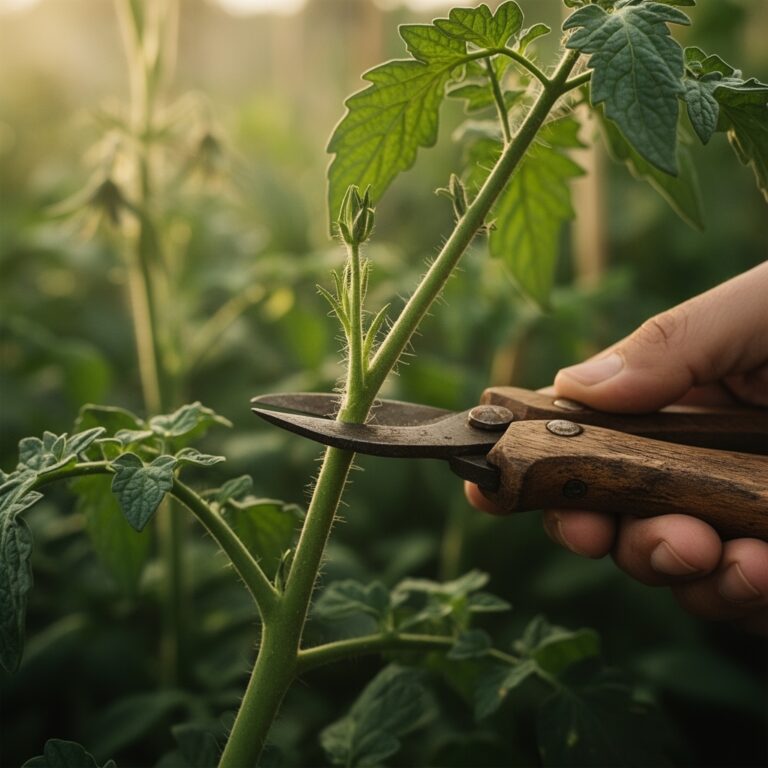
Top-dress with compost each spring at 0.5 inches to sustain organic matter and cation exchange capacity. Prune dead or crossing branches to reduce transpirational load and redirect energy toward root expansion.
FAQ
How long should I run drip irrigation for deep watering?
Run emitters for 45 to 90 minutes depending on flow rate and soil type. Clay requires longer durations to prevent runoff.
Can I deep water lawns?
Yes. Apply 1 inch weekly, measured with a rain gauge. This encourages roots to grow 6 to 8 inches deep, improving drought tolerance.
Does deep watering work in containers?
Containers drain too quickly. Instead, water until runoff appears, then repeat after 10 minutes to ensure complete saturation.
When should I stop deep watering in fall?
Continue until the ground freezes or plants enter dormancy. Deep soil moisture protects roots from winter desiccation.
Is deep watering necessary for annuals?
Less critical. Annuals have shallow roots and short lifecycles. Focus on consistent moisture in the top 4 inches.