8 Simple Ways How to Use Bottom Trays
The plastic bottom tray sits beneath your seed flats, forming a reservoir that can rescue a novice from daily watering schedules or drown a seedling in minutes. Learning how to use bottom trays correctly transforms germination rates and reduces transplant shock. The tray's shallow lip holds between one-quarter and one-half inch of water, which wicks upward through capillary action into your growing medium, delivering moisture directly to root zones while keeping foliage dry.
Materials
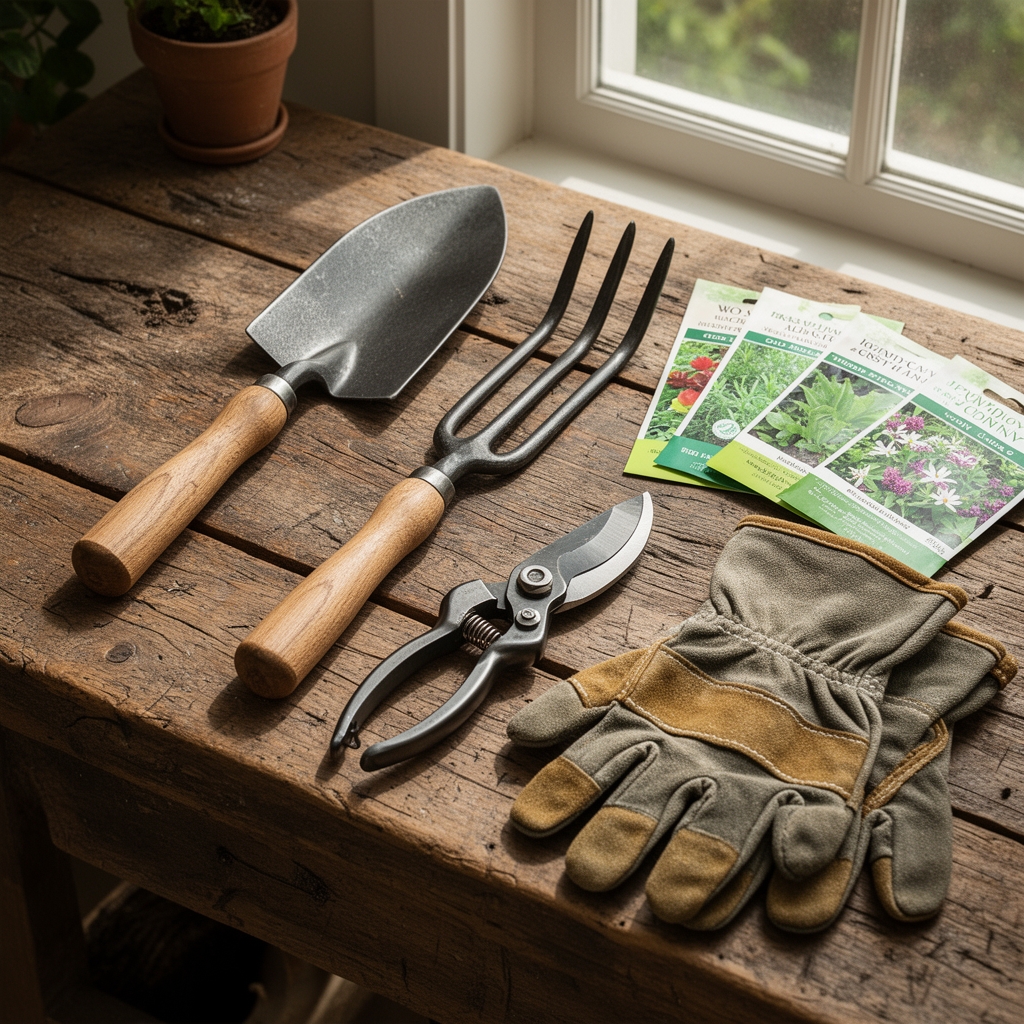
Bottom trays are manufactured in standard 10×20-inch dimensions or European 1020 formats. Pair them with seed cells that feature drainage holes of at least 3 mm diameter. Your growing medium should be a soilless blend: 40% peat or coir (pH 5.5-6.5), 40% perlite or vermiculite, and 20% compost screened to one-quarter inch. For fertility, incorporate a 4-4-4 organic meal (feather meal, bone meal, kelp) at one tablespoon per gallon of mix before filling cells. The balanced NPK ensures seedlings receive nitrogen for foliage, phosphorus for root initiation, and potassium for cellular integrity. Cation exchange capacity in quality compost will buffer pH swings and hold nutrient ions against leaching. Test your mix pH with a slurry method: one part medium to two parts distilled water, settled for 30 minutes, then measured with a calibrated meter.
Timing
In USDA Hardiness Zones 5-7, begin warm-season crops (tomatoes, peppers, basil) indoors six to eight weeks before the last frost date. Cool-season brassicas and lettuce tolerate starts four to six weeks prior. Zone 8-10 gardeners can direct-sow many species but still benefit from bottom tray systems for heat-sensitive crops during summer. Monitor soil temperature, not air temperature. Germination chambers or heat mats should hold the tray at 70-75 degrees Fahrenheit for solanaceous crops, 60-65 degrees for brassicas. Once radicles emerge, reduce temperature by five degrees to prevent hypocotyl stretch.
Phases
Sowing
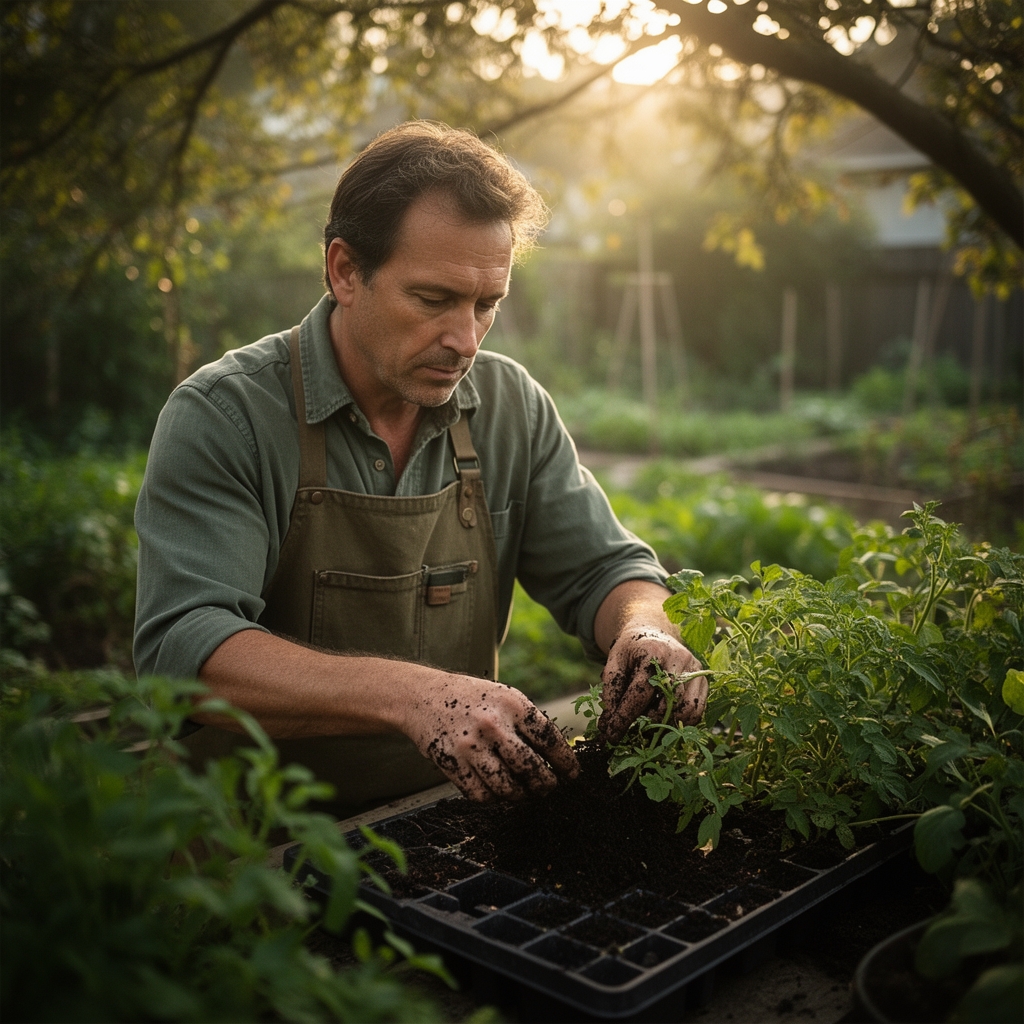
Fill cells to within one-quarter inch of the rim. Firm medium with a tray press or your palm to eliminate air pockets that disrupt capillary flow. Sow two seeds per cell at a depth equal to twice the seed diameter. Place the cell tray into the bottom tray and add room-temperature water until the liquid level reaches one-quarter inch. Capillary rise will saturate the medium in 20-40 minutes. Remove excess water after the surface glistens. Auxin distribution in the emerging radicle depends on consistent moisture gradients; intermittent flooding causes crooked hypocotyls.
Pro-Tip: Dust seeds with mycorrhizal fungi inoculant (Rhizophagus irregularis) before sowing. Hyphae colonize roots within 72 hours, extending effective root surface area by 100-fold and improving phosphorus uptake in low-fertility mixes.
Transplanting
When true leaves emerge and roots circle the cell base (typically 14-21 days), harden off seedlings by reducing water frequency. Allow the top half-inch of medium to dry between bottom-watering cycles. This stimulates lateral root branching and lignifies stems. Transplant into four-inch pots or garden beds when roots form a cohesive plug that slides from the cell intact. Water the bottom tray one final time 90 minutes before transplanting to hydrate tissues and reduce transplant shock.
Pro-Tip: Prune the radicle tip at a 45-degree angle if roots spiral. This mechanical intervention forces auxin redistribution and triggers adventitious root formation.
Establishing
Post-transplant, continue bottom watering for one week in four-inch pots. Fill trays to one-half inch depth every two to three days, always emptying after 30 minutes. This practice trains roots to grow downward rather than forming surface mats. Transition to overhead irrigation once the root ball fills 75% of the new container volume.
Pro-Tip: Apply a kelp extract foliar spray (diluted 1:500) 48 hours after transplanting. Cytokinins in kelp (Ascophyllum nodosum) reduce ethylene stress responses and accelerate leaf expansion.
Troubleshooting
Symptom: Damping-off. Seedlings collapse at soil line with water-soaked stems.
Solution: Sterilize trays with 10% bleach solution between uses. Reduce watering frequency to every 48 hours. Increase airflow to 50 cubic feet per minute across trays.
Symptom: Algae film on medium surface. Green or brown crust forms.
Solution: Top-dress cells with one-eighth inch of coarse perlite. Block light penetration. Algae competes for nitrogen but does not harm roots directly.
Symptom: Salt crust (white mineral deposits).
Solution: Flush cells with distilled water from above once weekly. Salt accumulation signals overfertilization or poor drainage. Reduce fertilizer concentration by 50%.
Symptom: Leggy seedlings with pale, elongated stems.
Solution: Provide 14-16 hours of light at 200-400 foot-candles for seedlings. Lower temperature by five degrees. Brush seedlings daily with your hand to stimulate thigmomorphogenesis (mechanical strengthening).
Symptom: Root rot. Brown, mushy roots with foul odor.
Solution: Discard affected plants. Ensure drainage holes remain unblocked. Never leave standing water in trays beyond 30 minutes.
Maintenance
Empty bottom trays completely after each watering cycle. Standing water for more than one hour creates anaerobic conditions that kill feeder roots. Provide one-quarter inch of water every 24-48 hours during active germination, then extend intervals to 72 hours as seedlings mature. Fertilize with half-strength liquid solution (1-1-1 fish emulsion) every 10 days, applied through the bottom tray. Monitor electrical conductivity of the medium; maintain 1.0-1.5 mS/cm for seedlings. Rotate trays 180 degrees every three days to counteract phototropic lean. Inspect drainage holes weekly and clear any blockages with a toothpick.
FAQ
How often should I water seedlings in bottom trays?
Water every 24-48 hours during germination, extending to every 72 hours once true leaves appear. The surface should dry slightly between waterings to prevent damping-off.
Can I leave water sitting in the bottom tray overnight?
No. Remove excess water within 30 minutes. Prolonged submersion suffocates roots by displacing oxygen in the soil pores.
What is the ideal water depth for bottom trays?
Maintain one-quarter to one-half inch depth. Capillary action will draw moisture upward through quality soilless mix within 20-40 minutes.
Do bottom trays work with all seed types?
They excel for fine seeds (lettuce, basil) and species prone to foliar disease. Large seeds (beans, squash) germinate faster with top watering to ensure immediate contact.
How do I prevent algae growth in bottom trays?
Empty trays completely after watering. Top-dress cells with coarse perlite to block light. Increase air circulation to 50 cubic feet per minute.