9 Natural Ways How to Prep a Wildflower Meadow
The scent of damp, disturbed earth signals the release of geosmin as you break the surface tension of a compacted field. Success in this endeavor depends on understanding the hydraulic conductivity of your soil and the specific requirements of native species. To learn how to prep a wildflower meadow, you must move beyond the aesthetic and focus on the biochemical reality of the site. This process requires the complete suppression of existing competitive vegetation and the stabilization of the seedbed to ensure maximum seed-to-soil contact. Without rigorous site preparation, the seed bank already present in the soil will outcompete your desired species within one growing season. You are not merely planting seeds; you are engineering a self-sustaining ecosystem that relies on low nutrient availability to prevent invasive grasses from dominating the landscape. By manipulating the soil profile and timing your intervention with the local photoperiod, you establish a resilient community of forbs and grasses that can withstand environmental stressors while maintaining high turgor pressure.
Materials:
The ideal substrate for a wildflower meadow is a friable loam with a pH range of 6.0 to 7.0. Unlike a vegetable garden, a meadow thrives in "lean" soil. High nitrogen levels encourage the rapid growth of invasive annual grasses that shade out slower-growing perennial wildflowers.
Target an NPK ratio of 5-10-10 if the soil is severely depleted; otherwise, do not add fertilizer. High Phosphorus (P) levels support root development and future anthesis without triggering the excessive vegetative growth associated with high Nitrogen (N). The Cation Exchange Capacity (CEC) should ideally fall between 10 and 25 meq/100g to ensure the soil can retain and exchange essential minerals like Calcium and Magnesium. If your soil is heavy clay, incorporate organic matter to improve aeration; if it is sandy, focus on increasing the water-holding capacity without creating anaerobic conditions in the rhizosphere.
Timing:
Timing is dictated by the Biological Clock of the specific species and your local USDA Hardiness Zone. In Zones 3 through 6, the optimal window for site preparation begins in late spring to exhaust the weed seed bank, with sowing occurring in late fall. This allows for cold stratification, a physiological process where seeds must experience a period of moist cold to break embryo dormancy.
In Zones 7 through 10, sowing typically occurs in early spring before the heat index rises. You must monitor the transition from the vegetative stage (leaf and stem production) to the reproductive stage (budding and flowering). This transition is often triggered by the photoperiod, the duration of light exposure in a 24-hour cycle. Aim to have seeds in the ground when soil temperatures consistently reach 55 degrees Fahrenheit for spring plantings, or after the first hard frost for dormant fall seedings.
Phases:
Site Clearance and Solarization
Before sowing, you must eliminate all existing vegetation. Use a silage tarp or clear UV-stabilized plastic to cover the area for 6 to 8 weeks during the peak of summer. This raises soil temperatures to levels that are lethal to weed seeds and pathogens in the top 2 inches of the soil profile.
Pro-Tip: This method utilizes thermal termination to kill weed seeds while preserving the deeper mycorrhizal symbiosis. These beneficial fungi form a network with wildflower roots, extending the reach of the root system to capture phosphorus and water that the plant could not access alone.
Sowing and Seed-to-Soil Contact
Once the site is clear, avoid deep tilling, which brings dormant weed seeds to the surface. Broadcast the seed mix at a rate of 5 to 8 pounds per acre for a dense stand. Use a weighted roller or cultipacker to press the seeds into the soil surface.
Pro-Tip: Many wildflower seeds are tiny and require light to trigger germination; this is known as positive photoblasty. If you bury these seeds deeper than 1/8 inch, they will fail to germinate because the light cannot reach the photoreceptors in the seed coat.
Establishing and Early Hydration
During the first 4 to 6 weeks, the meadow requires consistent moisture to ensure the radicle (the first root) does not desiccate. Apply 0.5 inches of water twice weekly if rainfall is insufficient.
Pro-Tip: Maintaining consistent moisture prevents auxin suppression in the developing seedling. Auxin is a hormone that regulates cell elongation; if the plant experiences drought stress early, auxin flow is disrupted, leading to stunted growth and poor structural integrity.
The Clinic:
Symptom: Interveinal Chlorosis
Diagnosis: Iron or Magnesium deficiency, often caused by a soil pH above 7.5 which locks these micronutrients.
Fix-It: Apply chelated iron or elemental sulfur to lower the pH and increase nutrient bioavailability in the rhizosphere.
Symptom: Leaf Curl and Distorted Growth
Diagnosis: Thrips or aphids feeding on the apical meristem, disrupting the plant's vascular flow.
Solution: Increase biodiversity to attract predatory insects; ensure the plants have adequate turgor pressure through deep watering to help them physically resist piercing-sucking mouthparts.
Symptom: Damping Off (Seedling Collapse)
Diagnosis: Fungal pathogens like Pythium or Rhizoctonia thriving in anaerobic, over-saturated soil.
Fix-It: Improve drainage and reduce sowing density to increase airflow. Ensure the soil surface dries slightly between watering cycles to inhibit fungal sporulation.
Maintenance:
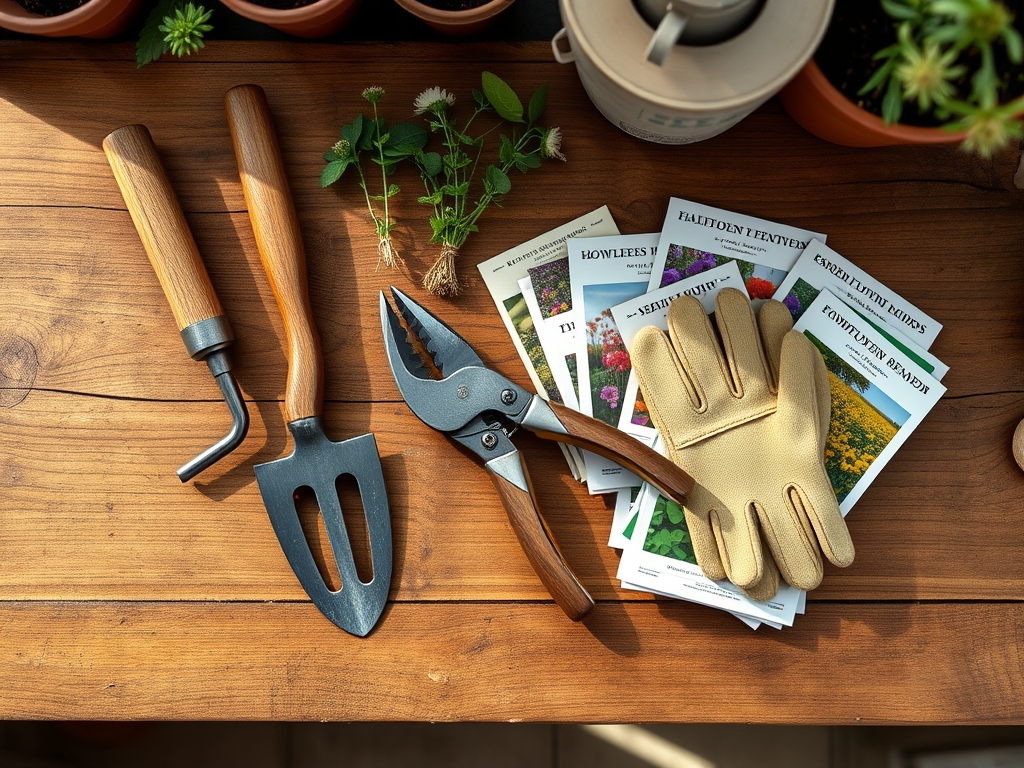
A wildflower meadow is low-maintenance but not "no-maintenance." Use a soil moisture meter to monitor the top 6 inches of the substrate; during the first year, ensure the plants receive 1.5 inches of water per week at the drip line. Use a hori-hori knife to extract deep-taprooted weeds like dandelion or dock without disturbing the surrounding wildflower root systems.
In late autumn, after the plants have reached senescence (the final stage of the life cycle where nutrients are pulled back into the roots), mow the meadow to a height of 4 to 6 inches. Use bypass pruners for selective heading cuts on woody species that may try to encroach on the meadow. This annual mowing mimics the historical grazing patterns of megafauna and prevents the meadow from reverting to scrubland or forest.
The Yield:
If you are harvesting wildflowers for arrangements, timing is critical for longevity. Harvest in the early morning when turgor pressure is at its peak and the stems are fully hydrated. Use sharp, sanitized shears to make a clean cut at a 45-degree angle.
Immediately plunge the stems into cool water. For species in the Asteraceae family, removing the lower leaves prevents bacterial buildup in the water, which can block the xylem and cause premature wilting. Store the flowers in a cool, dark location for two hours before arranging to allow the vascular system to stabilize post-harvest. This ensures "day-one" freshness for the maximum duration.
FAQ:
How long does it take to establish a meadow?
A perennial meadow typically requires three years to reach full maturity. The first year focuses on root establishment, the second on initial flowering, and the third on a full, self-sustaining canopy that suppresses weeds through resource competition.
Can I plant wildflowers in heavy clay?
Yes, but you must select species with high compaction tolerance. Incorporating 3 inches of compost into the top layer of soil before planting improves porosity and gas exchange, preventing the roots from suffocating in anaerobic, waterlogged conditions.
Why are my wildflowers not blooming the first year?
Many perennial species spend their first year in a vegetative state, allocating carbon to root structures rather than reproductive organs. This ensures the plant has the energy reserves to survive winter and produce robust blooms in subsequent seasons.
Do I need to pull weeds every week?
No. Once the meadow reaches canopy closure, the wildflowers will shade the soil surface, preventing weed seeds from germinating. Focus on removing invasive species in early spring and late summer before they have the chance to set seed.